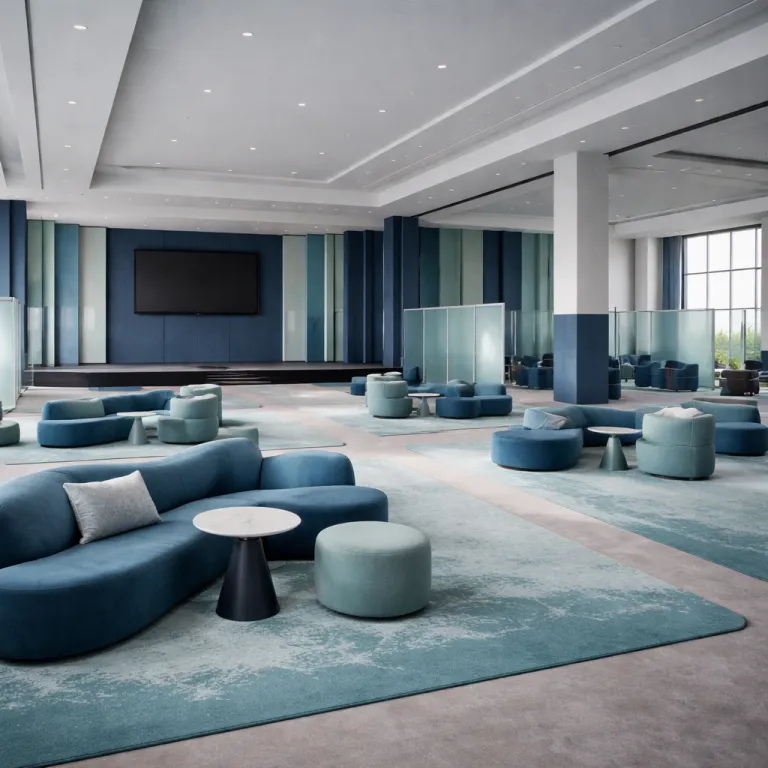
From beige ballrooms to flexible, character rich spaces
Business travelers booking a convention hotel now expect more than beige. The most forward looking properties translate convention hotel design trends 2026 into flexible spaces that feel intentional from pre check in to the last breakout. This shift in hotel design is reshaping how guests choose events and where they extend their stay.
Instead of one vast ballroom, new hospitality design projects prioritize dividable spaces that morph from plenary room to workshop cluster to evening lounge. Movable walls, acoustic partitions, and modular furniture allow the same interiors to host a keynote at 09.00, a wellness session at 15.00, and a cocktail reception at 19.00. These public spaces now support long term value for the property because they stay active all day, not just during peak conference hours.
For you as a guest, this means a convention hotel can feel like a luxury hotel without sacrificing functionality. You might step from a light filled public foyer into an immersive media space, then finish emails in a quiet corner that doubles as a night bar. These design trends make the guest experience more fluid, and they turn once generic hotels into destinations that compete directly with lifestyle properties across North America, the Red Sea, and beyond.
Lobby choreography, AI, and the new hospitality flow
The lobby has become the control tower of contemporary hospitality design. At leading hotels, AI powered spatial awareness now reads crowd patterns and adjusts lighting, sound, and furniture layouts in real time. This technology driven design responds directly to convention hotel design trends 2026, where the lobby must handle badge pickup at 08.00 and feel like a relaxed living room by 20.00.
Conference guests notice this choreography most around coffee breaks and informal meetings. Instead of static furniture, you see clusters of soft seating that slide apart for private conversations or pull together for quick team huddles, always balancing durable comfort with visual style. Smart interiors use sensors to manage sound levels, dim harsh lighting, and redirect flows away from congested public spaces so the guest experience feels calm even when the hotel is at full capacity.
Industry research captures the impact of this evolution. One verified insight from Hotel Management ("Designing for the New Convention Guest," 2023 editorial analysis) reports that “Hotels adopting vibrant designs” have reached 65% of surveyed properties, while a 2022 feature in Hospitality Design titled “The New Era of Convention Hotels” notes an “Increase in guest satisfaction” of around 20% in properties that upgraded their interiors. These figures, drawn from aggregated survey data and project case studies, show how design trends are no longer cosmetic but central to guest experiences and event bookings. When you evaluate a property online, look closely at lobby photos and floor plans, because they reveal whether the hotel design supports real world conference logistics or just looks good in a rendering.
The Greenleigh Hotel Houston and the rise of character rich convention stays
The Greenleigh Hotel Houston illustrates how a convention capable property can feel intimate yet highly functional. This hypothetical case study pairs a rooftop bar and a wood fired restaurant with approximately 1 200 square metres of event spaces, showing how convention hotel design trends 2026 can support both serious meetings and memorable evenings. For business leisure travelers, that mix of efficiency and atmosphere defines true luxury.
Inside the Greenleigh, interiors lean into warm materials, layered textures, and locally inspired art rather than anonymous beige. Flexible guest rooms double as work studios, while public spaces flow from lobby to terrace without hard boundaries, creating immersive experiences that encourage guests to linger. Event planners appreciate how each public zone can be reconfigured for workshops, private dinners, or wellness sessions without losing visual coherence.
This property also reflects broader hospitality design projects across North America, where hotels are closing the aesthetic gap between lifestyle and convention focused stays. Comparable real world examples include the JW Marriott Nashville and the Miami Beach Convention Center’s adjacent hotels, which combine large meeting volumes with rooftop venues and activated ground floor spaces that extend beyond the meeting level. When you compare options for your next conference, notice whether the hotel offers a rooftop or street facing social zones, because those features signal a long term investment in guest experiences, not just in selling square metres of carpeted function rooms.
Wellness central: how comfort and care shape guest decisions
Wellness has moved from optional extra to wellness central in the hierarchy of guest expectations. In convention hotel design trends 2026, wellness is woven into interior design, from natural materials underfoot to circadian friendly lighting in guest rooms and corridors. Travelers who extend their stay for leisure now expect a luxury hotel to support recovery as much as productivity.
Thoughtful hospitality design uses biophilic elements, quiet zones, and spa adjacent public spaces to soften the intensity of back to back sessions. You might find a small meditation room near the main ballroom, or a terrace with greenery where guests can take calls in fresh air, all arranged to maintain comfortable durability for heavy use. These projects treat wellness as part of the core guest experience rather than a separate spa brochure.
Inside the room, furniture choices matter as much as square metres. Ergonomic chairs, generous desks, and layered bedding create a sense of residential style comfort that still feels resilient, while acoustic panels and blackout curtains protect sleep after late networking. When you browse hotels online, look for language about wellness central features, such as air quality systems, daylight optimized interiors, and quiet zones, because these details often distinguish the most forward thinking properties.
Global references: from Miami Beach to the Red Sea and Saudi Arabia
Design thinking now travels as quickly as conference delegates. In Miami Beach, new hotels borrow from resort language with open air lobbies, art led interiors, and pool decks that double as event venues, all aligned with convention hotel design trends 2026. These properties blur the line between business and leisure, encouraging guests to add extra nights before or after their meetings.
Across the Red Sea and wider Saudi Arabia, large scale hospitality projects are redefining what a convention capable luxury hotel can be. Master planned resorts integrate conference centres with waterfront promenades, wellness pavilions, and immersive cultural experiences, ensuring that public spaces feel as considered as guest rooms. For international guests, this means a single property can host a global summit, a design fair, and a family holiday without sacrificing comfort or authenticity.
Design studios such as Wimberly Interiors and global brands like Ritz Carlton are shaping these interiors with a focus on materials that balance long term comfort and visual lightness. Stone, timber, and woven textiles appear in both guest rooms and meeting areas, creating continuity between work and rest. When you evaluate properties in North America, Miami Beach, or the Red Sea region, pay attention to how the hotel design references local culture while still delivering the technical infrastructure your event requires.
How design now drives event bookings and guest loyalty
Convention hotel design trends 2026 have turned aesthetics into a hard business metric. Event planners report that attendees increasingly factor hotel design into their registration decisions, especially when they are paying their own way to extend a trip. A property that offers memorable experiences in both guest rooms and public spaces will often win over a cheaper but generic competitor.
Research into hotel design evolution highlights several drivers behind this shift. One verified explanation from Hotel Management (2023 convention segment survey) notes that “Convention hotels are adopting vibrant, multifunctional spaces.” Another, cited by Hospitality Design in its 2022 “Meeting Spaces Reimagined” report, confirms that “Traditional designs were generic and uninspiring.” Together, these insights, based on interviews with owners, operators, and designers, show why hotels investing in bold interiors, flexible spaces, and immersive experiences are seeing measurable gains in guest satisfaction and repeat bookings.
For travelers, the practical takeaway is clear. When comparing hotels, look beyond room size and nightly rate to assess interior design quality, hospitality design credentials, and how the property supports informal networking. Tools such as the lobby bar test, explored in depth on convention stay’s guide to what convention hotels get right when they stop thinking like hotels, help you judge whether a space will work for real conversations after the last session. In this new era, the best convention hotel is the one where the badge feels optional by evening because the design quietly takes care of everything else.
Key statistics on evolving convention hotel design
- Hotels adopting vibrant, multifunctional designs reached 65% of surveyed properties, according to a 2023 Hotel Management analysis of convention focused portfolios, reflecting a decisive move away from generic interiors.
- Guest satisfaction scores increased by about 20% in hotels that invested in new hospitality design approaches, as reported in Hospitality Design’s 2022 coverage of renovated meeting hotels, underscoring the commercial impact of thoughtful interiors.
- Since the early 2020s, industry timelines compiled by trade publications show a clear progression from simple décor updates to full scale projects focused on flexible spaces and local culture integration.
- Design evolution data from operator surveys indicates that hotels prioritizing immersive experiences and wellness central features attract more diverse events, from creative conferences to leadership retreats.
FAQ: convention hotel design and your next booking
Why are convention hotels changing their designs ?
Convention hotels are changing their designs to enhance guest experience and reflect local culture, moving away from generic ballrooms toward flexible, character rich spaces. This evolution aligns with convention hotel design trends 2026, where immersive interiors and wellness central features influence both event planners and individual guests. Properties that adapt are seeing higher satisfaction scores and stronger long term loyalty, as reflected in recent Hotel Management and Hospitality Design survey findings.
What is maximalism in hotel design ?
Maximalism in hotel design is a trend emphasizing bold patterns and colors, often layered with local art and textured materials. In the context of convention properties, maximalist interiors help differentiate public spaces, making lobbies, corridors, and lounges feel memorable rather than interchangeable. When executed with care, this style still maintains comfort and clarity for wayfinding during busy events.
How does AI influence hotel design ?
AI influences hotel design by creating adaptable, responsive spaces that adjust to real time guest behavior. In lobbies and meeting levels, AI systems can tune lighting, sound, and temperature, and even suggest furniture layouts that improve crowd flow during peak conference moments. For guests, this means smoother transitions between sessions, less congestion, and a more comfortable overall experience.
How should I evaluate design when choosing a convention hotel ?
Start by examining photos and floor plans of guest rooms and public spaces, looking for flexible layouts, natural materials, and clear zoning for work and relaxation. Check whether the property mentions wellness central features, such as daylight optimized interiors or quiet zones, and whether the lobby and bar areas support informal networking. Reviews that reference specific design elements, not just general luxury, are usually more reliable indicators of real world comfort.
Do better designed convention hotels cost significantly more ?
Well designed convention hotels can sit at various price points, but properties that invest in thoughtful interiors often deliver better value for money. Flexible spaces, comfort focused furniture, and integrated wellness features reduce the need for costly add ons, such as external venues or equipment rentals. For many business leisure travelers, the improved guest experience justifies a slightly higher nightly rate, especially when extending a trip.