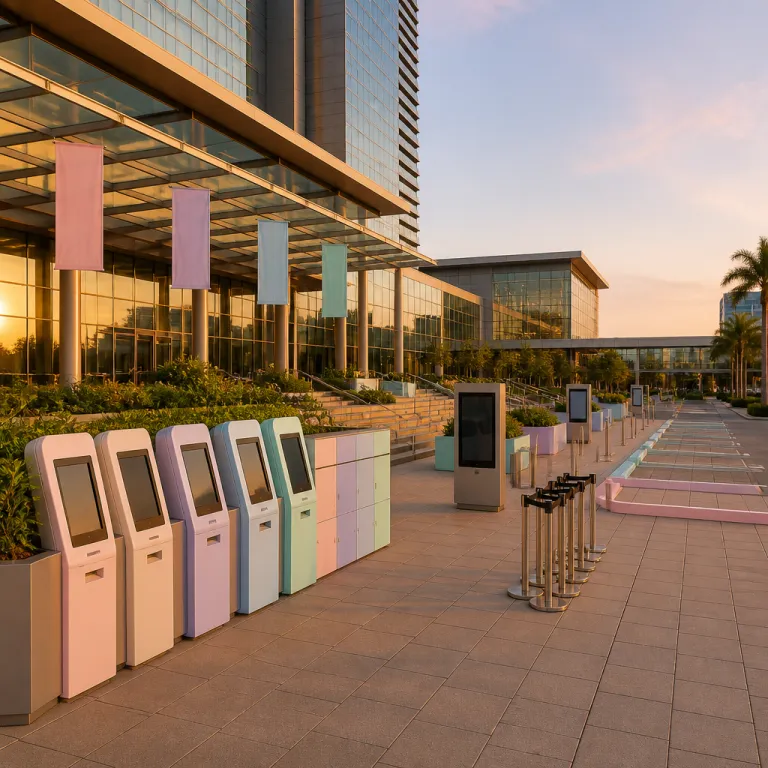
Why the AI concierge now sits where the front desk once stood
Walk into a leading convention hotel today and the first thing you notice is that the front desk queue has quietly vanished. In its place, an AI concierge–driven convention hotel model runs on discreet screens, QR codes and a calm lobby where guests move straight toward elevators instead of rope barriers. For solo business travelers used to late arrivals and early departures, this shift in hospitality feels less like a gimmick and more like a structural change in how hotels handle volume, consistency and guest satisfaction.
Across the hospitality industry, hundreds of properties already use AI-powered concierges that respond in seconds, twenty four hours a day, without overtime costs or shift changes. Marriott International, Hilton and Accor have all piloted or deployed AI assistants in selected hotels, while platforms such as Myma AI, KamarChat and OneHotel focus on integrating artificial intelligence into daily operations rather than replacing the human équipe entirely. These systems sit on top of existing hotel technology stacks, linking property management systems, payment gateways and messaging platforms so that a guest can request a hotel room change, a late check out or a conference schedule reminder from the same interface. Because the winning model is now a hybrid of AI precision and human empathy, hotel executives increasingly talk about “AI-augmented service” rather than full automation.
For convention travelers, the AI concierge experience often starts before arrival, when a link in the booking confirmation opens a chat window that already knows the conference dates and the convention center location. The digital concierge can pre assign a room near the elevators for a guest with mobility needs, flag a quiet floor for a speaker who will rehearse at night and push real time updates if the resort convention shuttle schedule changes. When the guest finally steps into the lobby, the system has already handled the routine work that used to keep staff behind the front desk instead of out in the lobby, where the real guest engagement happens. As one Miami convention hotel manager put it during a recent industry panel, “AI does the paperwork so my team can do the people work.”
What AI concierges already do well for convention guests
At its best, the AI concierge model in convention hotels excels at the repetitive, time sensitive tasks that once clogged the front desk line. An AI concierge is a virtual assistant that handles guest services using artificial intelligence. How do AI concierges improve guest experience? They provide instant responses, 24/7 availability, and personalized services.
In practice, that means a solo traveler landing in Miami after a delayed flight can check in from the airport, receive a digital key on their phone and head straight to the hotel room without speaking to anyone at midnight. The same artificial intelligence system can answer questions about the conference agenda, send directions to the convention center, suggest quiet corners for calls and even log maintenance issues in real time when a guest reports a flickering light or a noisy air conditioning unit. Because these AI systems integrate with hotel technology and back office systems, they can update room status, trigger housekeeping tasks and adjust late check out fees automatically, which protects revenue while still feeling guest friendly.
For luxury properties and resort hotels that host high level delegations, the AI concierge can also manage preferences with a precision that human staff struggle to maintain across shifts. It remembers that a returning guest prefers a high floor, a firm mattress and a room far from the elevator, then applies those preferences across different hotels in the same group. When a traveler books a presidential level stay for a major conference, the AI can coordinate airport transfers, meeting room layouts and in suite catering while human staff focus on the nuanced touches that define refined convention city stays. In this hybrid model, hotel owners see higher guest satisfaction scores and more efficient use of staff time, while guests experience less friction and more control.
The solo traveler at midnight and at 6 a.m. breakfast planning
For the Solo Explorer persona, the shift toward AI-enabled convention hotels is most visible in the quiet hours when traditional hospitality once struggled. Arriving alone at 00:30, you bypass the front desk, scan a code, and within seconds the AI concierge has verified your identity, assigned a room and pushed a digital key to your phone. No waiting behind a tour group, no spelling your name three times, just a short walk to the elevator and a hotel room that already has your preferred temperature and lighting scene set.
Six hours later, when jet lag wakes you before sunrise, the same AI concierge becomes your planning partner for the day’s conference. You can ask for a running route along Miami Beach, a quiet café within 500 m of the convention center or a breakfast spot where you can take a video call without background noise, and the system responds in real time with options filtered to your preferences. Because the AI has access to anonymized data about previous guests with similar patterns, it can suggest venues that work for early risers, late night networkers or those who prefer to retreat to resort hotels between sessions.
Where this becomes powerful for convention travelers is the way artificial intelligence connects the dots between your schedule, the event agenda and the physical layout of the resort convention property. If your first conference session starts at 08:00 in a ballroom on the far side of the complex, the AI concierge will nudge you to leave the hotel room earlier and may even suggest a coffee bar on the route where speakers tend to gather. For events hosted in oceanfront properties, such as large scale meetings in Florida, the smartest systems already recommend oceanfront convention hotels with meeting space for 500 attendees that balance walkability, Wi Fi reliability and post session relaxation.
Digital keys, voice interfaces and when the system breaks down
Digital keys are the most visible symbol of the AI concierge era in convention hotels, turning the smartphone into a personal remote control for the entire stay. In theory, you can check in on the way from Miami airport, ride the elevator using your phone, unlock the room, adjust the lights and order room service without touching a plastic key card or a paper menu. In practice, the experience depends heavily on how well the hotel’s systems talk to each other and how prepared the staff are when technology fails at the worst possible moment.
When everything works, hospitality technology feels almost invisible, and guest engagement happens naturally through a mix of chat, voice and in room controls. Voice interfaces let guests ask for extra towels, extend a stay or request a wake up call without picking up a phone, while the AI routes those requests to the right staff member in real time. At industry events such as the FIU TIED conference, hospitality leaders have watched robot concierge demonstrations where AI understood complex guest questions in real time, showing how far the hospitality industry has moved from simple chatbots toward context aware systems.
Yet every frequent traveler has a story about the digital transformation going sideways at a critical moment. The app crashes when you reach the door, the Bluetooth connection fails in a concrete heavy corridor, or the AI concierge misreads a complaint as a casual comment and closes the ticket too early. In 2023, for example, a large convention hotel in South Florida experienced a mobile key outage during a trade show arrival peak and had to revert to physical keys for several hours. This is where the hybrid model matters, because the best hotels keep a lean but empowered front desk team ready to override systems, issue physical keys and solve edge cases with human judgment. For convention guests on tight schedules, the top hospitality performers are not the ones with the flashiest hotel technology, but the ones where staff can step in gracefully when artificial intelligence hits its limits.
Hybrid hospitality in Miami, Miami Beach and beyond
Some of the clearest examples of AI concierge–enabled convention hotels come from dense convention districts where walking time and elevator waits matter as much as room size. In Miami and Miami Beach, large properties near the convention center now use AI to smooth the peaks around keynote sessions, trade show openings and late night returns from networking events. The systems predict when guests will flood back from the conference floor, pre stage housekeeping, adjust elevator logic and even recommend alternative breakfast times to spread demand.
For hotel owners, this orchestration is not just about guest satisfaction, it is about revenue and staffing stability. By letting artificial intelligence handle routine queries, schedule housekeeping more efficiently and triage maintenance tickets, hotels can run slimmer night shifts without sacrificing response times, which directly improves margins in an industry with tight labor markets. At the same time, the best boutique independent properties and larger American hotel brands use the freed capacity to put more visible staff in lobbies and lounges, where they can build relationships that no algorithm can replicate.
Events organized by players such as Informa plc have accelerated this shift by showcasing hospitality technology at trade show booths where hotel executives can see live demos of AI concierges, smart rooms and integrated systems. Many of these events encourage operators to register to attend sessions on digital transformation, data ethics and guest engagement, which helps align technology decisions with real guest needs rather than vendor hype. For travelers choosing between resort hotels in major convention cities, the most reliable indicator of a smooth stay is now whether the property has embraced this hybrid model, not whether it markets itself as cutting edge.
Privacy, data and how to choose your next convention stay
Behind the polished surface of the AI concierge experience in convention hotels lies a complex web of data flows that every traveler should understand. Each time you chat with the concierge, adjust a smart thermostat or use a digital key, the systems generate data about your behavior, preferences and movements within the property. Responsible hotels treat this as sensitive information, applying strict retention policies, encryption and clear opt out options rather than quietly feeding everything into opaque marketing engines.
When evaluating hotels for a major conference, ask direct questions about how artificial intelligence is used and what data is stored, for how long and for what purposes. Properties that take privacy seriously will explain which systems are on site, which are cloud based and how they anonymize guest profiles while still delivering personalized service. Many of the most forward looking hotels now publish privacy summaries alongside their sustainability reports, a trend that aligns with broader shifts in responsible travel such as the sustainable convention stay standards highlighted in Miami’s Green Key partnership.
For solo travelers who value both efficiency and authenticity, the goal is to find hotels where technology fades into the background and human hospitality still feels central. Look for signs that staff are trained to work with AI, not against it, such as agents who can see your chat history at the front desk or concierges who reference your digital preferences while still asking open questions. In the evolving hospitality industry, the properties that will stand out are those that use hotel technology to remove friction from the journey to and from the convention center, while leaving space for the unscripted lobby bar conversation that makes the badge feel optional by evening.
Key figures shaping the AI concierge era in convention hotels
- Industry estimates suggest that hundreds of hotels worldwide already use AI concierges, indicating that the shift from traditional front desk models to hybrid hospitality is well underway.
- Leading AI concierge platforms now support dozens of languages, which allows resort hotels in global convention hubs to serve international guests without relying solely on multilingual staff.
- Robot concierge demonstrations at events such as the FIU TIED conference have shown AI understanding guest questions in real time, illustrating how far hospitality technology has advanced beyond scripted chatbots.
- Digital keys, when fully integrated with hotel systems, provide better tracking and security than traditional key cards, reducing lost key incidents and associated operational costs for hotel owners.
- Hybrid AI plus human models are emerging as the top hospitality approach, with AI handling routine tasks and human staff focusing on complex issues, complaints and high value guest engagement.
FAQ about AI concierges in convention hotels
What is an AI concierge in a convention hotel ?
An AI concierge in a convention hotel is a virtual assistant that uses artificial intelligence to handle guest services such as check in, room requests, information about the conference and local recommendations. It usually operates through chat, mobile apps or in room interfaces rather than a physical desk. The goal is to reduce wait times and provide consistent, twenty four hour support.
Are AI concierges replacing human staff in hotels ?
AI concierges are not replacing human staff entirely, but they are taking over routine, repetitive tasks that once consumed a lot of front desk time. This allows staff to focus on complex issues, personalized service and high value guest engagement, especially during busy conference periods. The most effective hotels use a hybrid model where AI and humans work together.
How do AI concierges improve the experience for solo convention travelers ?
For solo travelers, AI concierges make late night arrivals and early departures smoother by enabling mobile check in, digital keys and instant responses to questions. They can provide tailored recommendations for restaurants, running routes or quiet workspaces near the convention center based on guest preferences. This reduces friction and helps travelers feel oriented even in unfamiliar cities.
What data does an AI concierge collect during a hotel stay ?
An AI concierge typically collects data related to your stay, such as booking details, room preferences, service requests and interaction history. Some systems also log device information and usage patterns for digital keys or in room controls. Responsible hotels anonymize this information where possible, limit retention periods and explain clearly how the information is used.
How can I tell if a convention hotel uses AI responsibly ?
You can look for transparent privacy policies, clear explanations of how artificial intelligence is used and options to opt out of certain data uses. Hotels that train staff to work with AI, rather than hide behind it, usually provide better support when technology fails. Reading detailed reviews and asking direct questions before you register to attend a major conference can also reveal how mature a property’s digital transformation really is.